In recent years, homeschooling has gained remarkable popularity. A total of 55.292 million children are homeschooled worldwide, benefiting from this alternative educational approach. The well known benefits of it are numerous; however, some lesser known ones can influence parents to consider it.
One notable benefit is its ability to create a flexible learning environment that differs from traditional schooling. In an independent setting, children can focus on their individual growth without the distractions and anxieties that peer competition can bring.
Moreover, it is highly adaptable and can be tailored to meet the unique needs of various children. This approach goes beyond merely customising the curriculum; it extends to accommodating a wide range of learning styles, abilities, and preferences. It can be adjusted to suit kids who are behind, who are gifted or advanced, those who have ADD/ADHD, or special needs. This adaptability ensures that every child receives an education tailored to their strengths and supports their weaknesses.
Here, we will analyze some of these lesser known merits of self-directed learning, shedding light on the myriad ways in which it fosters enhanced bonding between parents and children and creates tailored learning environments. As we will explore, it offers an excess of unique benefits that can significantly contribute to a child's growth and development, making it a viable educational choice for those seeking a more personalised and effective approach to learning.
Why consider Homeschooling?
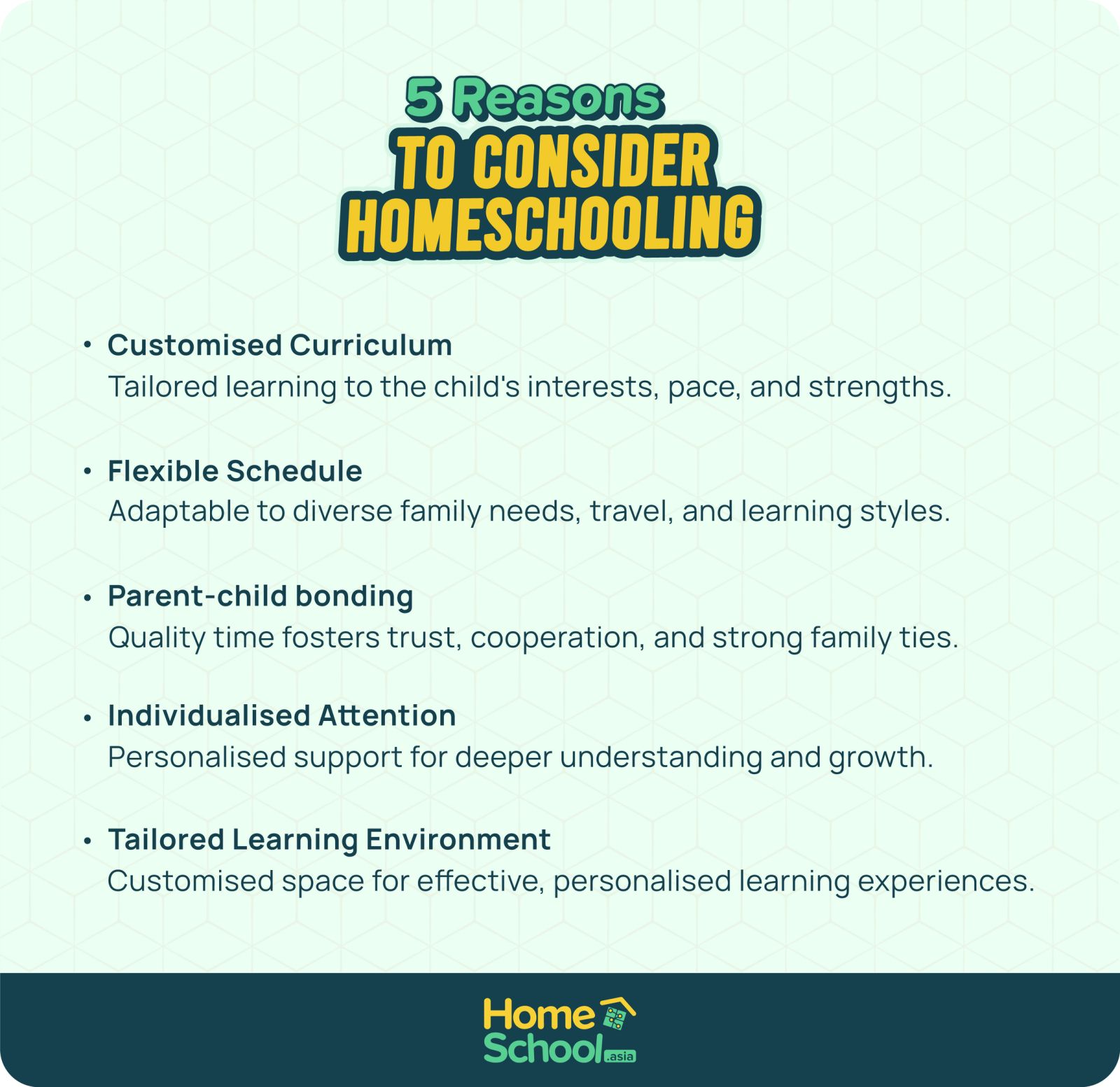
Customised Curriculum:
Homeschooled children have the unique opportunity to learn at their own pace and explore their interests in depth. Parents can tailor the curriculum to their child's specific needs, strengths, and learning style. For example, a child who is passionate about science can spend more time on science experiments and projects.
A child who struggles with Maths can receive additional support and individualised instruction. Home taught children also have the flexibility to explore niche subjects or dive deeper into specific topics that are not typically covered in traditional schools. For instance, a child may be interested in learning about ancient Egypt or astrophysics. Parents can easily find learning resources and materials to support their child's learning interests.
Flexible Schedule:
The flexibility afforded to remote schooling families when it comes to aligning their schedules is undeniably one of the most notable advantages of this educational approach. This adaptability can be a game changer for various family dynamics, catering to the diverse needs of children and parents alike. Families with multiple children, for instance, can tailor their home learning hours to best suit the learning styles and preferences of each child. For families with children who have special needs, such flexibility ensures that lessons can be adapted to accommodate their individual requirements, providing a more nurturing and effective learning environment.
Moreover, it can be a boon for families who frequently travel. Instead of being bound by rigid school schedules, families can plan their lessons around their travel plans, enabling children to learn on the go and experience education in diverse settings. Consider a family with younger children who opt to self-study in the mornings and afternoons, reserving evenings for quality family time and engaging activities. Alternatively, families with older children may choose a condensed four-day school week, thereby granting an extra day to explore extracurricular activities or embark on enriching field trips.
Parent-child bonding:
A study by the National Home Education Research Institute found that 94% of independent schooled students reported feeling close to their parents, compared to 74% of traditionally schooled students. It provides a unique opportunity for parents and children to spend quality time together and learn from each other.
Sharing learning experiences can help strengthen family bonds and create lasting memories. Homeschooling offers parents the chance to spend quality time with their children, tailor the curriculum to their interests, and collaborate on engaging projects, fostering trust and cooperation.
Individualised Attention:
One of the key benefits of homeschooling is the individualised attention that children receive. These children typically have a lower student-teacher ratio than traditionally schooled children, which means that they receive more one-on-one attention from their parents or other educators. This individualised attention can have a significant impact on a child's learning.
Studies have shown that these children perform equally, if not better than, traditionally schooled kids on standardised tests. However, the benefits of individualised attention go beyond standardised test scores. As a result, they often develop a deeper understanding of the material they are learning, and they are more likely to be engaged and motivated in their studies.
Individualised attention can also help children who opt to self-study to develop their unique talents and abilities. If a child is passionate about a particular subject, the educator can tailor the curriculum to meet their interests and provide them with opportunities to explore their passion in depth. Individualised attention can also help these children who are struggling in a particular area. The educator can provide additional support and instruction to help the child overcome their challenges.
Tailored Learning Environment:
Parent led education offers a unique benefit in creating a learning environment tailored to a child's individual needs. Not only is it free from the distractions and peer pressure often found in traditional school settings, but parents also have the freedom to design a learning space that is not only comfortable but also highly conducive to effective learning. This tailored approach can encompass a wide range of considerations.
For instance, a child who learns best through physical activity may require a spacious area where they can move around freely, fostering kinesthetic learning. On the other hand, a child who is easily distracted may thrive in a quiet, isolated workspace where they can concentrate without disruptions. Beyond the physical setup, parents can further tailor the learning environment to their child's specific learning style.
Visual learners can benefit from the incorporation of charts, diagrams, and other visual aids. In contrast, auditory learners may excel when provided with opportunities to engage with audiobooks and other auditory resources. This adaptability ensures that each child's unique learning preferences and needs are not just considered but actively integrated into their educational experience, ultimately enhancing the effectiveness of self-directed learning as an educational choice.
Conclusion
Homeschooling is a unique and individualised approach to education, offering various benefits for children. It enables hands-on learning, allowing kids to engage in active experiences such as science experiments and community volunteering, fostering critical thinking and problem solving skills. Additionally, it promotes essential life skills like time management and organisation, as children take responsibility for their education and develop self-reliance. Furthermore, it nurtures a child's passions and talents by tailoring the curriculum to their interests, enabling a deeper exploration of their unique abilities.
In essence, it presents a myriad of perks that greatly contribute to a child's personal and educational development. It's essential to thoroughly research both its pros and challenges to ensure it aligns with your needs when considering this option for your child.